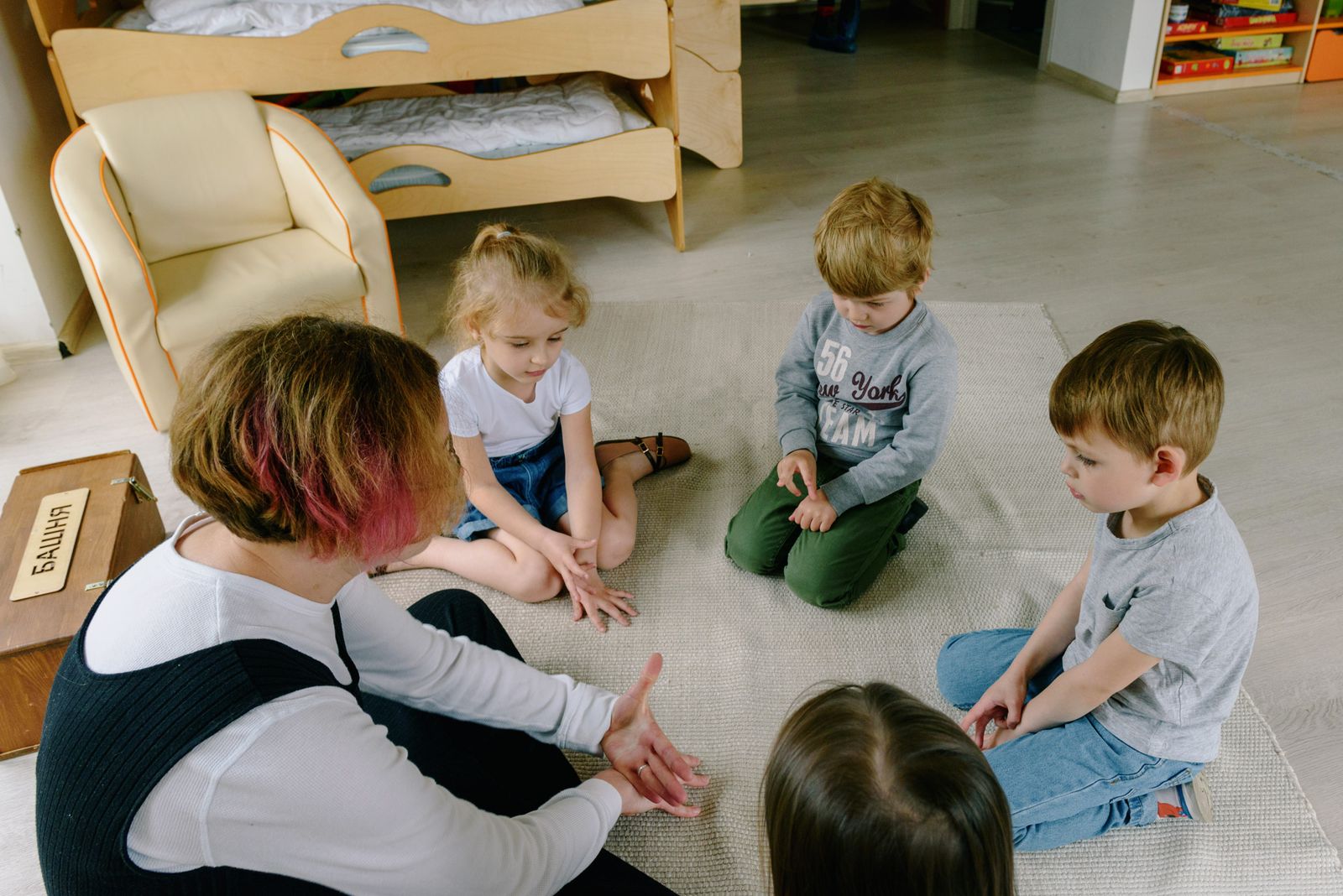
Little Oak Preschool - Menlo Park offers full- and part-time care for infants through age 6 through a nurturing, developmentally focused program that blends Montessori and play-based philosophies across our four classroom age groups.
Infant (Newborn – 18 months)
Classroom: Caterpillars
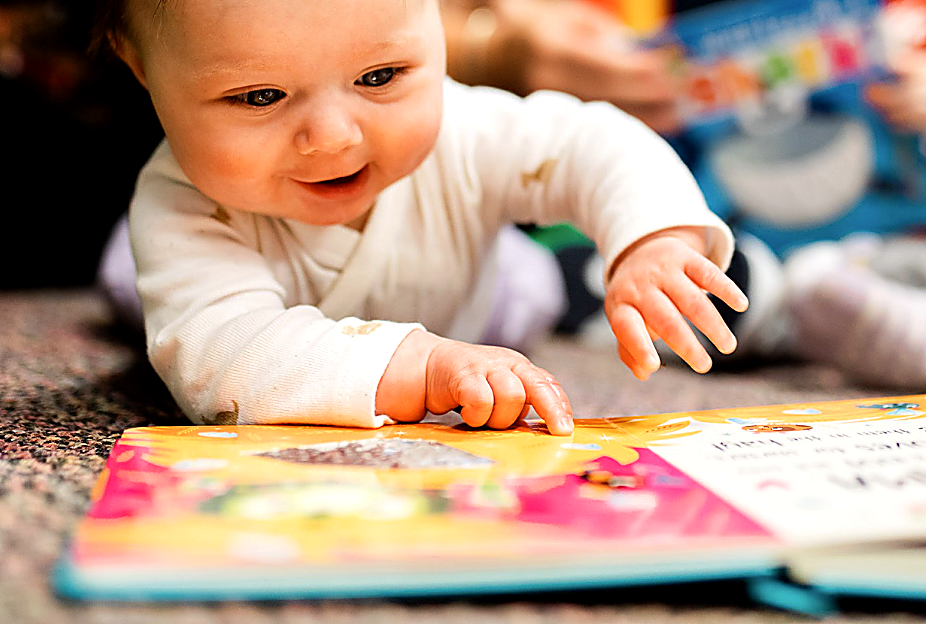
Our Infant Program provides a safe, nurturing, and stimulating environment for babies from newborn to 18 months. We focus on individualized care and support each child’s physical, emotional, and cognitive development through responsive interactions, age-appropriate activities, and a consistent daily routine.
Our caregivers build strong, loving relationships with each infant to foster a sense of security and trust during this critical stage of growth.
Toddler (18 months - 30 months)
Classroom: Butterflies
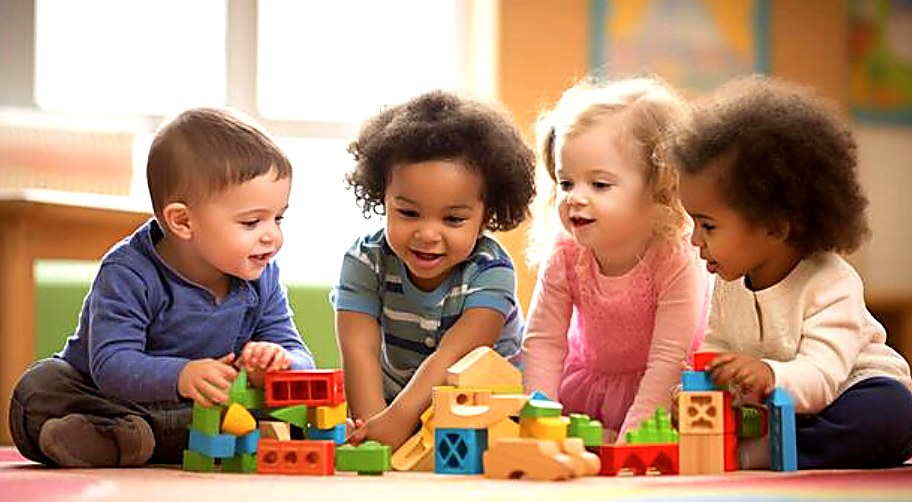
Our Young Toddler Program combines the structure of Montessori learning with the creativity and joy of play-based exploration. In a thoughtfully prepared environment, toddlers are encouraged to develop independence, self-help skills, and concentration through hands-on Montessori activities.
At the same time, open-ended play supports social-emotional growth, language development, and imagination. Guided by nurturing teachers, each child is supported at their own pace to build confidence, curiosity, and a love of learning.
Preschoolers (2.5 – 4 years)
Classroom: Robins
In our Montessori + play-based program, young preschoolers thrive through a balance of independent, hands-on Montessori tasks like pouring, dressing, sensorial sorting, and bead-stringing alongside free and facilitated play including dramatic play, creative projects, nature exploration, STEAM, and music-and-movement activities.
This integrated approach supports fine and gross motor development, independence, concentration, early literacy and numeracy, and social-emotional growth such as sharing, language development, and imaginative problem-solving.
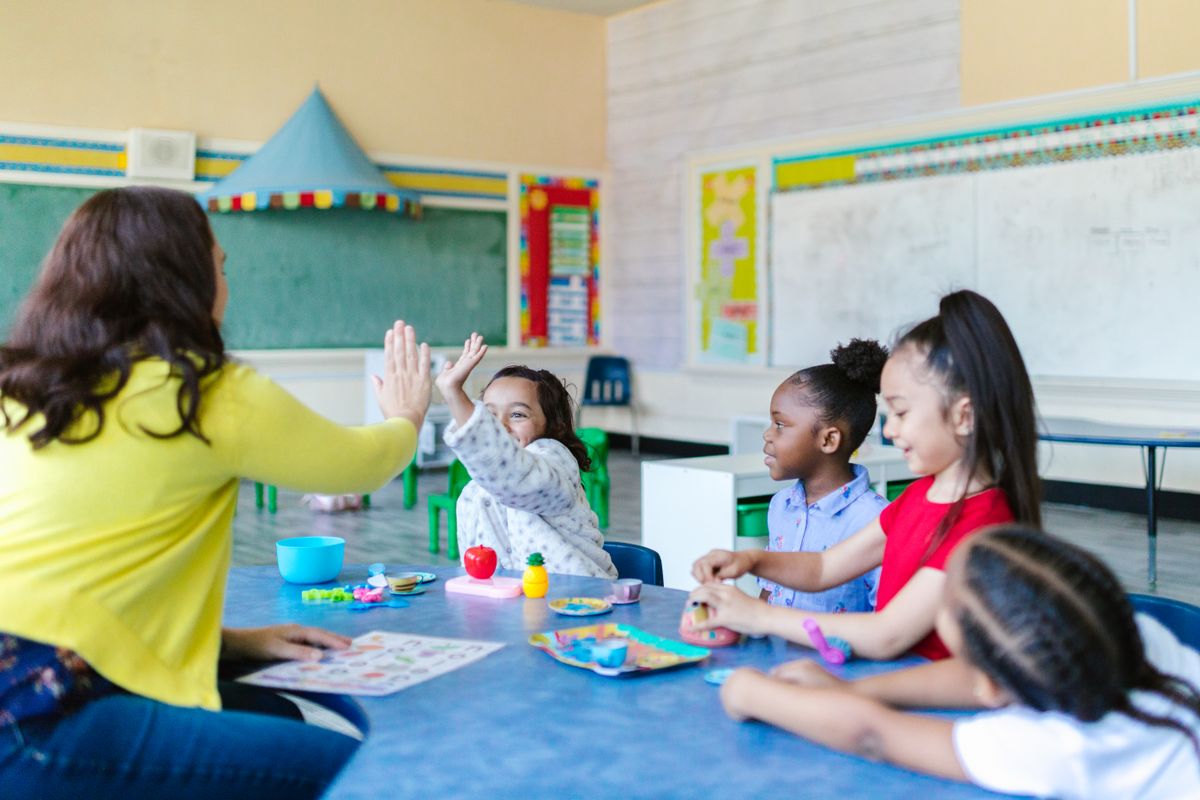
TK/Pre-K (3.5 – 6 years)
Classroom: Bluejays
In our TK/Pre-K classrooms, children engage in purposeful Montessori work such as concrete math, sensorial refinement, practical life activities like food preparation and gardening, and emergent literacy experiences with sandpaper letters and movable alphabets.
Interspersed with imaginative play, STEAM, robotics, cooperative building, nature exploration, art, and guided music-and-movement, children apply skills in both real-world and creative contexts. Mixed-age interactions support peer mentoring and leadership while prepared environments and guided play offer both freedom and structure.

What We Teach
Our curriculum blends traditional Montessori content areas — language, mathematics, sensorial, and practical life — with play-based STEAM, art, music and movement, and outdoor exploration. Every activity is designed to nurture the whole child.
Language Activities
Activities range from naming ordinary objects to writing down observations, creating a strong foundation for reading and writing skills.
Spanish
Children are introduced to Spanish through songs, greetings, colors, and everyday vocabulary — building early language awareness and a love for cultural connection.
Yoga & Dance
Through guided yoga poses and creative movement, children develop body awareness, coordination, and emotional regulation — while having a whole lot of fun along the way.
Mathematics Tasks
Children learn to count and sort objects while experiencing the wonder of math from both quantitative and numerical perspectives.
Sensorial Materials
Sensorial work focuses on concepts such as diameter, size, and shape, strengthening children’s practical understanding of the world around them.
Practical Life
Practical life experiences offer daily-living exercises designed to strengthen hand-eye coordination, motor skills, and independence.
Culture and Geography
Children are introduced to the diversity of the world through holidays, seasons, community experiences, and early geography learning.
Art Activities
Art gives children opportunities for self-expression while exploring techniques and styles inspired by different artists and time periods.
Music & Movement
Music and movement give children early exposure to the performing arts, supporting rhythm, expression, coordination, and intellectual development.
Mixed-Age Group Classes
Mixed-age classes create a natural setting for peer observation, modeling, role-reversal, and teamwork.
STEAM
Hands-on STEAM projects combine science, technology, engineering, art, and math to build creativity, critical thinking, and problem-solving skills.
Outdoor Activities
Running, climbing, nature walks, and sand and water play support physical health, creativity, social interaction, and emotional well-being.
Social-Emotional Learning
Children practice recognizing and managing emotions, understanding others’ perspectives, taking turns, resolving conflicts, and building positive relationships.
Ready to Learn More?
Schedule a tour and see firsthand why families trust us with their children's early education.